How to Prepare for Behavioral Interview Questions: 2026 Strategy
How to Prepare for Behavioral Interview Questions: 2026 Strategy
Behavioral interviews have evolved in 2026, focusing more on real-time problem-solving, emotional intelligence, and future potential than past experiences alone. This guide provides a modern approach to mastering behavioral questions with frameworks that work in today’s competitive job market.
The 2026 Behavioral Interview Shift
What’s changed in behavioral interviews:
- AI-assisted analysis: Some companies use AI to analyze response patterns
- Real-time scenarios: More “what would you do” vs. “what did you do”
- Values alignment: Greater focus on cultural and ethical fit
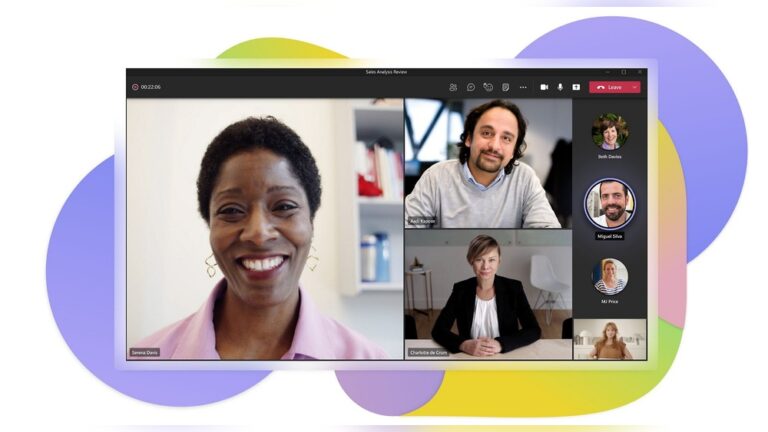
- Remote dynamics: Virtual interviews require different delivery techniques
The STAR-R Method (Enhanced for 2026)
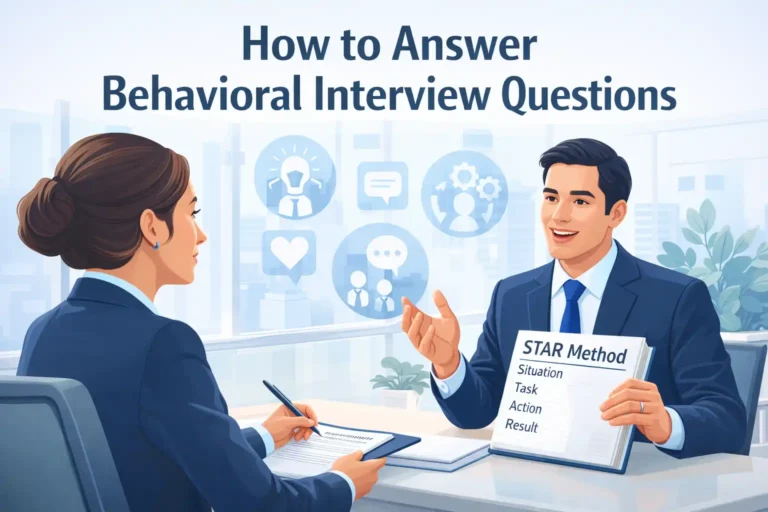
The classic STAR method now includes Reflection (STAR-R):
Situation (10%)
Keep it brief: “In my previous role as project manager during a product launch…”
Task (10%)
Your responsibility: “I was tasked with coordinating three teams to meet a tight deadline.”
Action (50%)
The core: “I implemented daily stand-ups, created a shared dashboard, and facilitated cross-team problem-solving sessions.”
Result (20%)
Quantify: “We launched on time, 15% under budget, with 95% team satisfaction scores.”
Reflection (10%)
The 2026 addition: “Looking back, I learned the importance of transparent communication under pressure, which I now apply to all complex projects.”
Top 10 Behavioral Questions & How to Answer Them
1. “Tell me about a time you failed.”
Strategy: Show growth, not just failure.
Answer structure: Brief situation → Your actions → What you learned → How you applied it since
2. “Describe a conflict with a coworker.”
Strategy: Focus on resolution, not the conflict.
Answer structure: Professional disagreement → Your communication approach → Collaborative solution → Stronger relationship outcome
3. “Give an example of leadership without authority.”
Strategy: Show influence and initiative.
Answer structure: Identified problem → Built consensus → Led implementation → Measurable impact
4. “How do you handle tight deadlines?”
Strategy: Demonstrate systematic approach.
Answer structure: Pressure situation → Prioritization method → Team coordination → Successful delivery
5. “Describe adapting to change.”
Strategy: Show flexibility and learning agility.
Answer structure: Unexpected change → Your adaptation process → Skills developed → Positive outcome
6. “Tell me about a creative solution.”
Strategy: Highlight innovation within constraints.
Answer structure: Challenge with limitations → Creative approach → Implementation → Results beyond expectations
7. “How do you receive feedback?”
Strategy: Show growth mindset.
Answer structure: Specific feedback received → Your reaction → Changes made → Improvement demonstrated
8. “Describe mentoring someone.”
Strategy: Demonstrate teaching ability.
Answer structure: Mentee’s starting point → Your approach → Their progress → Your learning from teaching
9. “Give an example of ethical dilemma.”
Strategy: Show integrity and decision-making.
Answer structure: Ethical challenge → Your analysis → Action taken → Why it was the right choice
10. “How do you handle competing priorities?”
Strategy: Demonstrate strategic thinking.
Answer structure: Multiple demands → Your evaluation framework → Negotiation/communication → Successful balancing
Building Your Story Bank
Essential Stories to Prepare:
- A time you overcame a significant challenge
- When you made a mistake and learned from it
- How you influenced without authority
- A successful team collaboration
- When you had to adapt quickly
- A creative problem you solved
- How you handled conflict
- A time you went above and beyond
- When you received difficult feedback
- How you mentored or helped someone
Story Development Worksheet:
For each story, document:
- Situation: 1-2 sentences max
- Your role: What was expected of you
- Actions: 3-5 specific things you did
- Results: Quantifiable outcomes
- Skills demonstrated: Which competencies this shows
- Alternative uses: Other questions this story could answer
Virtual Interview Specifics for 2026
Technical Preparation:
- Test camera, microphone, and internet 30 minutes before
- Use wired connection if possible
- Close unnecessary applications
- Have phone charged as backup
Delivery Adjustments:
- Look at the camera, not the screen
- Use slightly more expressive gestures (they translate better on camera)
- Pause slightly longer for potential lag
- Have notes visible but not reading from them
Virtual STAR-R Delivery:
- Use screen sharing for portfolio pieces if relevant
- Reference shared documents if provided beforehand
- Use virtual whiteboard for complex explanations
- Ask for clarification if audio/video issues occur
The 7-Day Preparation Plan
Day 1-2: Story Development
- Identify 10-12 key experiences
- Develop STAR-R outlines for each
- Quantify results where possible
Day 3-4: Practice & Refinement
- Practice aloud, record yourself
- Time responses (90-120 seconds ideal)
- Refine based on playback
Day 5: Company Research
- Study company values and recent news
- Identify which stories align with their culture
- Prepare questions about their challenges
Day 6: Mock Interviews
- Practice with a friend or mentor
- Simulate virtual conditions if applicable
- Get feedback on content and delivery
Day 7: Final Preparation
- Review key stories
- Prepare interview logistics
- Mindset preparation (confidence, curiosity)
Common Mistakes to Avoid
❌ Memorizing scripted answers:
Sounds robotic. Know your stories but speak naturally.
❌ Too much detail:
Get to the point. Interviewers have limited attention.
❌ Negative framing:
Even when discussing failure, focus on learning.
❌ Taking all credit:
Use “we” for team successes, “I” for your specific contributions.
❌ Not practicing aloud:
Thinking through answers isn’t enough. Say them out loud.
Advanced Techniques for 2026
Emotional Intelligence Demonstration:
- Show self-awareness in your reflections
- Demonstrate empathy in conflict stories
- Express genuine enthusiasm for the role
Future-Oriented Storytelling:
- Connect past experiences to future contributions
- Show how you’ve evolved your approach over time
- Demonstrate continuous learning mindset
Values Alignment:
- Research company values beforehand
- Incorporate relevant values into your stories
- Ask values-based questions in your turn
Handling Curveball Questions
“What would you do in [hypothetical scenario]?”
Strategy: Think aloud, show process.
Response: “I’d start by gathering information about X, then consider Y, and likely proceed with Z because…”
“Tell me something not on your resume.”
Strategy: Reveal character, not just skills.
Response: Share a passion project, volunteer work, or personal growth experience that shows values.
“Where do you see yourself in 5 years?”
Strategy: Align with company growth.
Response: “I hope to have developed deep expertise in X while contributing to company goals like Y.”
Post-Interview Strategy
Immediate Reflection:
- Note which stories resonated
- Identify questions you struggled with
- Update your story bank based on experience
Thank You Note Integration:
- Reference a specific story you shared
- Connect it to how you can help them
- Reinforce your enthusiasm for the role
Success Metrics
You’re prepared when you can:
- Answer any behavioral question within 2 minutes
- Adapt the same story to multiple questions
- Speak confidently without notes
- Connect your experiences to the company’s needs
- Handle unexpected questions calmly
Conclusion: The Modern Behavioral Interview
Behavioral interviews in 2026 are less about perfect stories and more about demonstrating thinking patterns, values alignment, and growth potential. By preparing a flexible story bank, practicing authentic delivery, and focusing on what you’ve learned (not just what you’ve done), you can turn behavioral questions into opportunities to showcase why you’re the right fit.
Remember: The goal isn’t to have the most impressive stories—it’s to have relevant stories told effectively. Your experiences, framed through the STAR-R method and delivered with confidence, will make you stand out in any behavioral interview.
Need more practice? Download our behavioral interview workbook with 50+ questions and worksheets.
Related Articles
- How to Answer ‘Tell Me About Yourself’ in an Interview: The 2026 Formula
- How to Write a Cover Letter for a Career Change: A Step-by-Step Guide
- Salary Negotiation Strategies: Proven Tips to Maximize Your Pay
- Remote Work Interview Prep: Ace Your Job with Confidence Today
- Which Websites Offer Free Resume-Building and Interview Preparation Resources? Top Picks