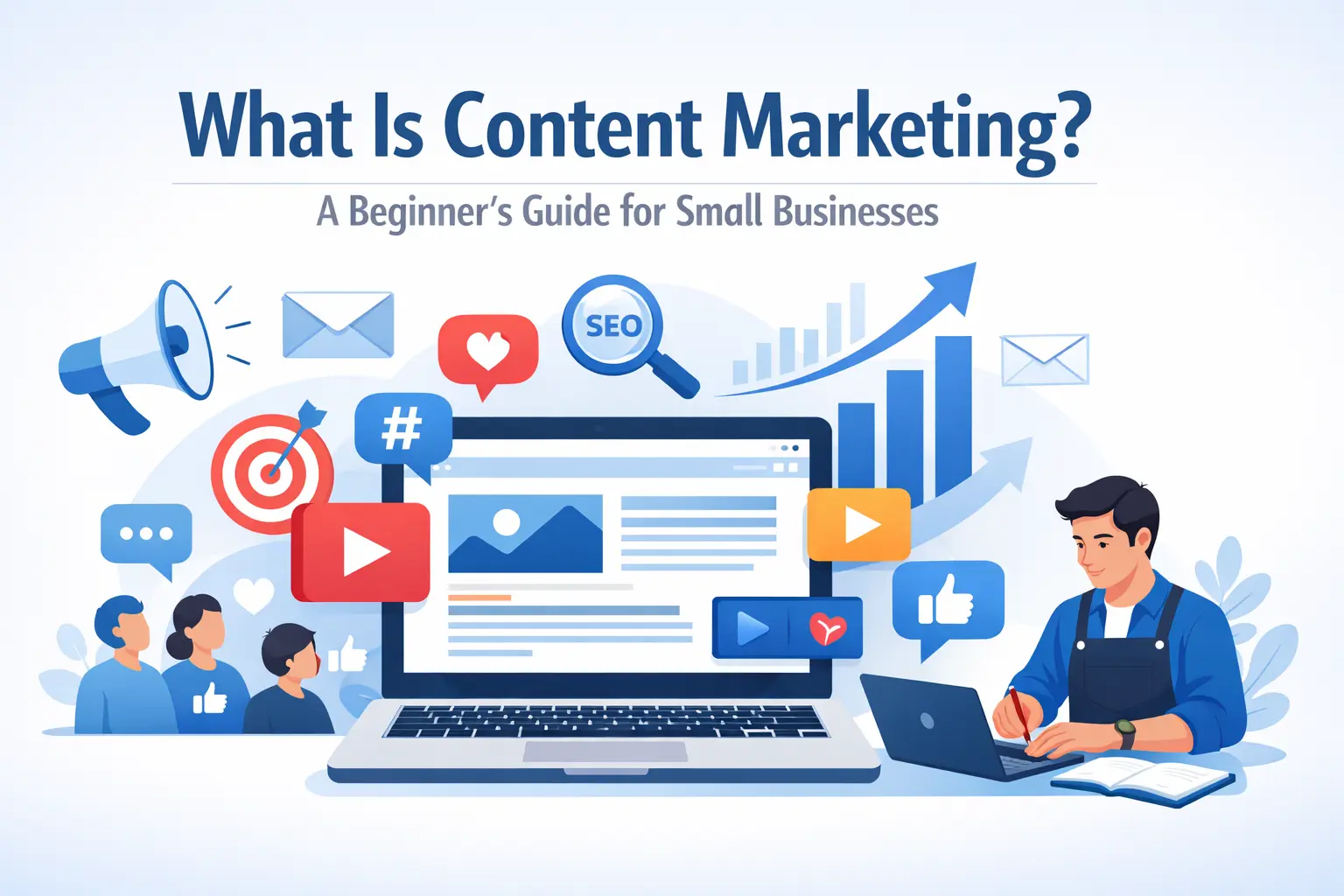
What Is Content Marketing? A Clear Guide for Beginners
Content marketing is a strategy where businesses create and share valuable information to attract and engage potential customers instead of directly advertising to them. This content can include blog posts, videos, guides, social media posts, podcasts, or infographics that help people solve problems or learn something useful.
Content marketing has become essential for small businesses competing in today’s digital landscape. Unlike traditional advertising that interrupts potential customers, content marketing attracts them by providing genuine value.
If you’re a small business owner wondering what content marketing is and whether it’s right for your business, this guide breaks down everything you need to know. You’ll learn what content marketing actually means, how it works, why it matters for small businesses, and how to start implementing it effectively.
What Content Marketing Actually Means
Content marketing is a strategic approach focused on creating and distributing valuable, relevant content to attract and retain a clearly defined audience. Rather than directly pitching products or services, you provide genuinely useful information that helps your target customers solve problems or answer questions.
The content can take many forms: blog posts, videos, podcasts, infographics, social media posts, email newsletters, or guides. What makes it “marketing” is the strategic intent behind it—building relationships with potential customers by consistently delivering value.
This approach differs fundamentally from traditional advertising. Where a print ad or TV commercial interrupts someone’s day to promote your business, content marketing draws people in because they’re actively seeking the information you provide.
Why Content Marketing Works for Small Businesses
Content marketing levels the playing field for small businesses competing against larger companies with bigger advertising budgets.
When you create helpful content, you demonstrate expertise without requiring a large upfront investment. A well-written blog post costs time rather than thousands of dollars in ad spend, yet it continues attracting visitors months or years after publication.
Content builds trust gradually. Small businesses often struggle with credibility when competing against established brands. By consistently sharing knowledge, you prove your expertise and establish yourself as a reliable resource. When potential customers are ready to buy, they think of you first.
Search engines reward quality content. When someone searches for solutions you provide, helpful content positions your business in front of them at exactly the right moment. This targeted visibility is difficult to achieve through traditional advertising alone.
The approach also creates assets that compound over time. Unlike a paid ad that stops working when you stop paying, published content continues generating value indefinitely.
How Content Marketing Attracts and Converts Customers
The content marketing process follows a natural customer journey that aligns with how people actually make purchasing decisions.
Awareness Stage
Potential customers first become aware that they have a problem or need. They search for information to understand their situation better. Content targeting this stage answers basic questions and provides educational resources.
A landscaping company might create content explaining “signs your lawn needs professional care” or “common lawn diseases in spring.” These pieces attract homeowners just beginning to recognize they need help.
Consideration Stage
Once aware of their problem, potential customers research possible solutions. They compare approaches and evaluate different options. Content at this stage helps them understand what solutions exist and how to evaluate them.
The same landscaping company might publish guides on “organic versus traditional lawn care” or “what to look for in a lawn care service.” This content helps prospects understand their options without pushing them toward a sale.
Decision Stage
Finally, when ready to purchase, customers look for reasons to choose one provider over another. Content here addresses specific concerns, demonstrates expertise, and builds confidence.
Customer success stories, detailed service explanations, or answers to frequently asked questions help potential customers feel confident choosing your business.
Core Components of Effective Content Marketing
Successful content marketing requires several interconnected elements working together strategically.
Audience Understanding
Everything starts with knowing who you’re trying to reach. Small business owners often try to create content for everyone, which rarely works well. Effective content speaks directly to specific people with specific needs.
Define your ideal customer clearly. What challenges do they face? What questions keep them up at night? What information do they need at different stages of their journey? The more specifically you understand your audience, the more relevant your content becomes.
Consistent Value Delivery
Content marketing only works when you consistently provide genuine value. Every piece should help your audience in some tangible way, answering questions, solving problems, or providing useful perspectives.
Avoid creating content solely to promote yourself. Ask whether each piece would be helpful even if you removed all mentions of your business. If not, reconsider your approach.
Strategic Distribution
Creating great content means nothing if your target audience never sees it. Distribution matters as much as creation.
Identify where your potential customers spend time online. Business owners in certain industries might gather on specific forums or social platforms. Parents of young children might search for advice on particular blogs or communities.
Meet your audience where they already are rather than expecting them to find you.
Measurement and Adaptation
Track what content performs well and what doesn’t. Look beyond vanity metrics like page views to understand whether content actually drives business results.
Which topics generate the most engagement? What formats work best? Which pieces lead to actual customer inquiries or sales? Use these insights to refine your approach continuously.
Common Content Marketing Mistakes Small Businesses Make
Understanding what doesn’t work helps you avoid wasting time and resources.
Many small businesses create sporadic content without consistency. Publishing three blog posts in one week, then nothing for months, confuses both search engines and potential customers. Consistency matters more than volume; one quality piece monthly beats five mediocre pieces published irregularly.
Another common mistake is creating content too focused on your business rather than your customers’ needs. Content that only discusses your services, awards, or company history rarely attracts new customers. Lead with value, not self-promotion.
Small businesses also frequently give up too soon. Content marketing builds momentum gradually. You might not see significant results for six months or longer. Success requires patience and persistence.
Finally, many businesses create content without clear goals. Are you trying to attract new customers? Build email subscribers? Establish expertise? Different goals require different content approaches and success metrics.
Getting Started: First Steps for Small Business Owners
Beginning content marketing doesn’t require a large team or budget. Start with these practical steps.
Identify one primary content format that matches your strengths and resources. If you enjoy writing and can dedicate two hours weekly, start with blog posts. If you’re comfortable on camera and have a smartphone, consider short videos.
Choose three to five topics you can discuss with genuine expertise. These should align with questions your ideal customers frequently ask or problems they need solved.
Create a simple editorial calendar outlining what you’ll publish and when. Commit to a realistic schedule you can maintain long-term. Publishing one quality piece monthly beats attempting weekly posts you can’t sustain.
Set up basic analytics to track performance. Free tools exist for measuring website traffic, engagement, and conversions. Establish baseline metrics so you can measure improvement over time.
Focus on one distribution channel initially. If your customers search online frequently, prioritize search engine visibility. If they’re active on a particular social platform, focus there.
Key Takeaways
- Content marketing attracts customers by providing valuable information rather than interrupting them with advertisements
- Small businesses benefit because content builds trust and expertise without requiring large advertising budgets
- Effective content addresses different stages of the customer journey, from initial awareness through final purchase decisions
- Success requires understanding your specific audience deeply and consistently delivering content that helps them
- Common mistakes include inconsistent publishing, excessive self-promotion, impatience, and a lack of clear goals
- Start small with one content format and a realistic publishing schedule you can maintain long-term
- Content marketing builds momentum gradually, expect to invest at least six months before seeing significant results
- Measure performance beyond basic metrics to understand what actually drives business outcomes
What is content marketing in simple terms?
Content marketing is a strategy where businesses create helpful content—such as blog posts, videos, or guides- to attract and educate potential customers instead of directly promoting products.
Why is content marketing important for small businesses?
Content marketing helps small businesses build trust, improve search engine visibility, and attract customers without spending large amounts on advertising.
What types of content are used in content marketing?
Common types include blog articles, videos, infographics, podcasts, email newsletters, social media posts, and downloadable guides.
How long does it take for content marketing to work?
Content marketing usually takes 3–6 months to show noticeable results because it builds audience trust and search engine visibility gradually.
Content marketing represents a fundamental shift in how small businesses attract and build relationships with customers. By focusing on providing genuine value rather than pushing sales messages, you position your business as a trusted resource in your field. Understanding what content marketing is and how it works gives you a powerful tool for competing effectively, even with limited resources.
Start with a focused approach, commit to consistency, and give your content time to build momentum. The relationships and authority you establish through valuable content create lasting business advantages that compound over time.
guiadenoivos.saojosedojardimeuropa.com.br
beyond.globalpranichealing.com